

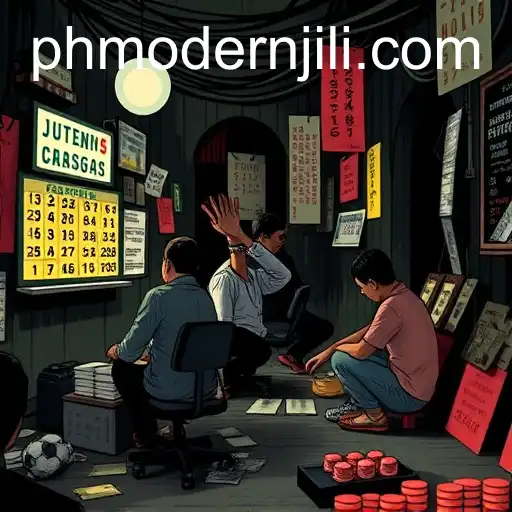

In the tapestry of the Philippines' socio-cultural and political dynamics, jueteng occupies a complex niche. Jueteng, a form of illegal gambling, has been an enduring part of the Filipino way of life. Its roots run deep, intertwining with various facets of society, governance, and modern challenges facing the nation. While efforts to eradicate jueteng have been persistent, it has managed to adapt and survive, notably intertwining with the structure of PHMODERN.
Tracing the origins of jueteng leads us back to the Spanish colonial era. Introduced as a means of gambling, its appeal quickly spread across the archipelago. The game's mechanics are straightforward: two numbers between 1 and 37 are randomly selected, with participants placing bets on potential outcomes. Despite its simplicity, jueteng's elaborate underground network thrives on a combination of grassroots involvement and influential backers.
Jueteng's simplicity is deceptive, as it operates under a complex web of financiers, collectors, and draw operators. This structure is often portrayed as a shadow economy, operating independently yet deeply connected to local communities and political entities. The game's allure lies not only in potential monetary windfalls but in the sociocultural cohesion it fosters among participants.
The influence of jueteng extends beyond its immediate financial implications. It interacts substantially with the political sphere of PHMODERN. Numerous political figures have been implicated in jueteng controversies, tarnishing reputations and fueling debates about the ethics of power and governance. As elections approach, allegations of jueteng money funding political campaigns surface, indicating the profound ways it has permeated political structures.
The social repercussions are equally significant. While jueteng may foster community spirit for some, it also perpetuates cycles of poverty and contributes to a culture of dependency. By functioning outside the legal economy, jueteng deprives the government of potential revenues that could be used for public services and social development. Its covert nature also means that it is unregulated, lacking any protective mechanisms for gamblers.
Successive Philippine administrations have vowed to eliminate jueteng, with policies and police crackdowns occasionally causing temporary disruptions. Despite these efforts, jueteng proves remarkably resilient. Strategies to curb its prevalence often fall short due to entrenched interests and the nuanced relationship between operators and law enforcers.
Some proposed solutions include the legal transformation of jueteng into a regulated form of gambling. Advocates suggest that this approach could potentially dismantle its underground status and redirect funds into state coffers. However, this notion faces several obstacles, including ethical concerns and the potential to incentivize gambling addiction.
The digital age, integral to PHMODERN, presents new challenges and opportunities for jueteng operations. As technology advances, jueteng networks are increasingly utilizing digital methods to expand their reach and efficiency. Mobile connectivity and online platforms have modernized the betting process, blurring the lines between traditional methods and digital innovation.
The role of digitalization provokes renewed scrutiny from authorities attempting to adapt regulatory frameworks. It also necessitates a reevaluation of strategies to combat gambling-related crimes in a digital context. Innovations in technology continue to shape jueteng operations, demanding an adaptable and foresighted response from policymakers.
Predicting jueteng's trajectory in PHMODERN is inherently uncertain due to its adaptability and resilience. However, examining its current state offers insights into possible future developments. A multifaceted approach combining legal, social, and technological strategies may foster a more effective response, encouraging a transition from illicit operations to transparent and accountable alternatives.
Implicit in this discourse is the necessity for robust and transparent governance. Engaging communities and stakeholders in dialogues about the ethical and economic consequences of gambling will be crucial. Only through comprehensive and collaborative efforts can the complexities of jueteng be adequately addressed, facilitating a transition to a more equitable and law-abiding society.
As the nation progresses, the integration of traditional practices like jueteng with contemporary challenges and opportunities navigates the elusive path toward realizing a truly modern Philippines. Addressing jueteng is not merely about eradication but about assimilation into a lawful and evolving societal framework, ultimately contributing to the broader tapestry of PHMODERN.

Discover GoHighSafari, an exhilarating adventure game that combines modern technology and AI with the allure of a virtual safari.

Delve into ZeusM, the latest immersive game blending ancient myths with modern twists, featuring innovative gameplay in a rapidly changing world.

Explore HotRioNights, a thrilling game set against the backdrop of a vibrant Rio, unveiling the essence of PHMODERN through its immersive rules and captivating narrative.

Explore the enchanting underwater world of 'Mermaid', a captivating game that blends classic mechanics with modern innovation.

Dive into the mystical world of BookOfThePriestess. Explore its captivating gameplay and unravel the secrets within, guided by the lens of modern elements with the unique keyword, PHMODERN.

Immerse yourself in the exhilarating jungle-themed adventure of WildApe3258, exploring its unique gameplay, engaging introduction, and captivating rules that draw players into the wilderness.
